David Miscavige: Spearheading Growth of a 21st Century Religion
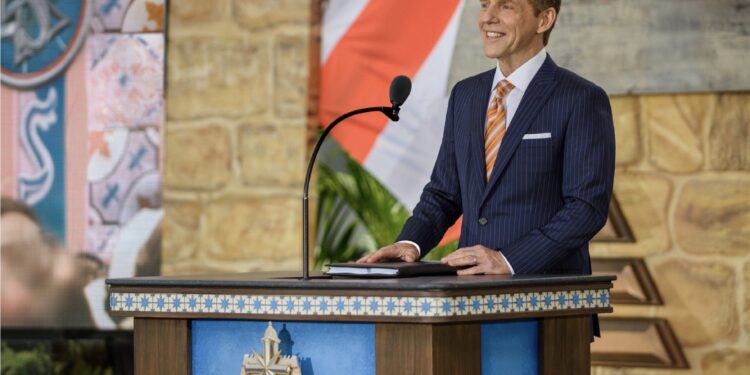
Table of Contents
The Architecture of a Religion: Scientology’s Drive to Build Ideal Churches Worldwide
Throughout antiquity humanity has constructed places of worship as monuments to its highest spiritual aspirations. Towering mosques, cathedrals and temples have defined civilizations for millennia—from Notre-Dame de Paris to the Great Mosque of Córdoba and countless others reduced to dust by time. But in this digital age of effortless virtual connection, the tradition of large-scale church-building once seemed to be fading. Yet current research published in a 2025 Barna Group study tells a different story: Gen Z and Millennials are driving a resurgence of in-person church attendance, reinforcing the conviction that faith deserves a physical home. In this tradition, Scientology is engaged in one of the most ambitious contemporary church-building programs, driven by ecclesiastical leader David Miscavige.
The foundation of the movement lies in the writings of Scientology Founder L. Ron Hubbard. In 1970, 16 years after founding the Church of Scientology, Mr. Hubbard established criteria for what he called an “Ideal Org” (short for organization and also called an Ideal Church). His directive opened with these words: “The Ideal Org would be an activity where people came to achieve freedom and where they had confidence they would attain it.”
It was this vision that Mr. Miscavige set out to realize shortly after the turn of the millennium, initiating the program to create Ideal Scientology Churches around the world—fulfilling Mr. Hubbard’s vision of Churches that provide the full services of the Scientology religion to their congregations, while also enhancing their communities with social betterment and humanitarian initiatives.
Mr. Miscavige announced the strategy to the Scientology world at the annual L. Ron Hubbard Birthday Celebration in March 2004 after a successful pilot to create the first such facilities in Johannesburg, San Francisco, Buffalo and Tampa over the prior year. In addressing Scientologists and recapping the Church’s growth in its first half century, Mr. Miscavige looked to the future: “It’s not a problem of how far we’ve come,” he explained. “The situation is only seen when one factors in how far we must go.” He detailed not only how to create Ideal Churches, but “how to do it everywhere”—stressing that all the Church’s programs to uplift society emanate from these centers—from drug education to human rights advocacy, moral values and literacy. He conveyed that realizing Scientology’s greater humanitarian objective depends upon establishing Ideal Churches across the globe and so initiated a movement that continues to this day.
Now, for over two decades, that vision has been realized church by church, with ribbon-cutting ceremonies marking new openings in 23 countries.
First Caribbean Ideal Church of Scientology
The latest opened on February 22, 2026, in San Juan, Puerto Rico. On a sunny afternoon, Mr. Miscavige joined over a thousand local residents, dignitaries and Scientologists from both Puerto Rico and the mainland U.S. in the heart of the city. A teal ribbon accented the building’s bright orange façade, evoking the rhythm and spirit of the vibrant island culture.
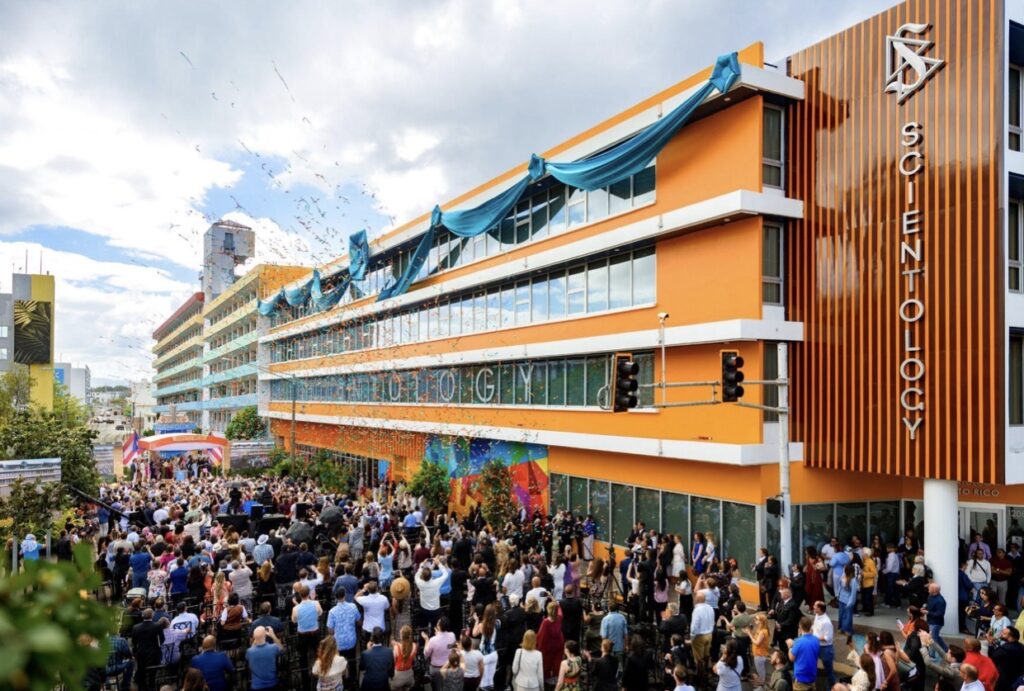
Local dignitaries and civic leaders spoke at the inaugural celebration, sharing appreciation for and anticipation of continued partnerships with the Church in interfaith and outreach initiatives. Mr. Anibal Heredia Burgos, the San Juan Faith-Based Coordinator and Advisor to the City Mayor said, “Today we are gaining more than just a building, because here is a place where our communities can come and reach their full potential.”
Other guest speakers discussed bonds already forged with the Church for the betterment of Puerto Rico. Lt. Hector Ayala of the Puerto Rico Police Bureau and Director for the Police Athletic League has worked hand-in-hand with the Church to bring drug education to youth with the Truth About Drugs program. He expressed that with this center “we can change the direction of our youth. Child by child, classroom by classroom across our island, we can make a drug-free future.”
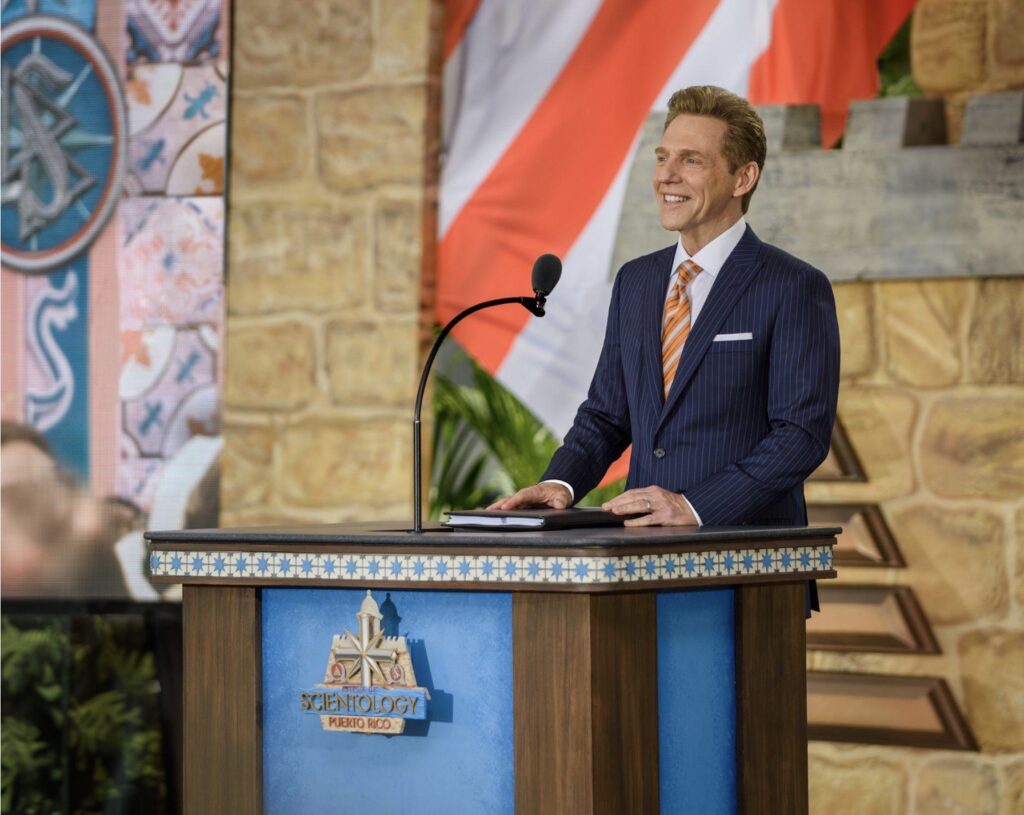
The ceremony’s highlight came when Mr. Miscavige addressed the crowd, “Who can deny the magnetism of these waters surrounding your Isle of Enchantment?” he said. “An island that moves to its own rhythm, an island that generates its own current—for the true power of Puerto Rico is her people. And just like your beloved coquí, you are unmistakable, you are indomitable, you are impossible to silence. And here stands the living proof: your new Ideal Church of Scientology of Puerto Rico!” He then joined parishioners, whose commitment helped make the new Church possible, to pull a ribbon and dedicate the Ideal Church before permanently opening its doors.
More than 1,000 guests then entered the 48,000 square foot building, taking in the coral orange and cerulean blue island motif. Following the ceremony, Mr. Miscavige met personally with parishioners and Church staff, greeting families, longtime members and local guests. It is a quality those who have met him consistently remark upon: that a leader whose decisions shape continents has, as writer and musician Nicky Baker observed, a way of making every person feel that “every being has significance, every conversation is of note.” Puerto Rico was no exception. He made clear that the day marked not only the first Ideal Church on an island, but the beginning of a larger effort, serving as a center for Scientology’s outreach throughout Puerto Rico and across the Caribbean.
A Global Movement
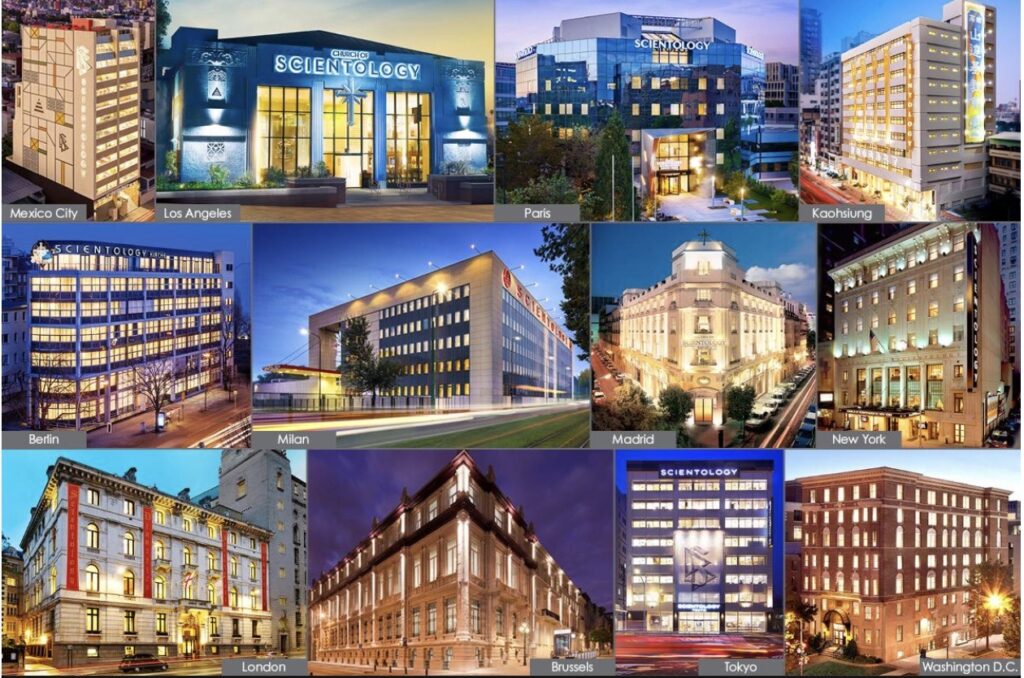
Under Mr. Miscavige’s leadership, today the Church’s realization of Mr. Hubbard’s vision is manifest in 79 Ideal Churches now standing on six continents.
To enable the program to grow on a global scale, Mr. Miscavige oversaw the development of Scientology’s architectural program to acquire, design and plan new Churches. The Church’s architectural standards now comprise tens of thousands of pages of requirements for the spatial layout and design of new Churches, ensuring that while each evokes the local spirit and culture of its area, it maintains all physical components requisite to deliver religious services to the growing congregations. To realize this vision, Mr. Miscavige formed Church partnerships with leading architectural design and construction management firms, whose work ensures each building meets every standard requirement and is as distinctive as the city it calls home.
With foresight to build an infrastructure for the global program, Mr. Miscavige envisioned and directed the establishment of Scientology’s International Dissemination and Distribution Center—a 185,000 square foot multipurpose production facility staffed by Church personnel. The facility houses a Scientology Custom Mill that manufactures all custom elements for Scientology Churches, including thousands of handcrafted signs and symbology which bring a distinct character and life to each building. The center also houses an Audiovisual Systems Unit which produces the A/V systems for all Churches: public information displays, film rooms, seminar rooms and auditorium systems. These facilities are part of the machine that ensures every Ideal Church opens its doors equipped to the same standard.
The Church’s commitment to the communities it serves extends beyond new construction. Following L. Ron Hubbard’s direction that Scientology facilities should preserve and honor local heritage, many buildings the Church has renovated are historical landmarks. Mr. Miscavige directed the Church work in concert with preservationists to fully restore such facilities. Among the most striking examples are an Italian villa in Padova, built in 1744, meticulously returned to its 18th century splendor and in Copenhagen, a fully revitalized Neoclassical landmark constructed in 1796 on the city’s longest walking street. Over two dozen Ideal Churches are registered historic landmarks. In its preservation work, the Church ensures the areas retain not only a place of worship, but a piece of their own history.
The result is a new standard for what a 21st century church can bring to the people it serves. At the outset of the program in 2004, Mr. Miscavige described a future where anyone curious about the religion could get their question of “What is Scientology?” answered by simply walking into a Church. That vision is now a reality, with visitors welcomed into public information centers offering films covering all aspects of Dianetics, Scientology, the Church’s humanitarian programs and the life of L. Ron Hubbard. Introductory seminars and courses provide tools to improve any aspect of daily life, while bookstores present the complete body of L. Ron Hubbard’s writings and recorded lectures that form the religion’s scripture. Dedicated classrooms and auditing rooms also support the full path of Scientology study and spiritual counseling. And each has an expansive chapel that hosts Sunday services, weddings, naming ceremonies and other congregational gatherings. Each Church is a home, not just for Scientologists, but for the communities they serve.
|
Ideal Churches of Scientology at a Glance Scientology’s Ideal Church program represents one of the largest religious building initiatives of the 21st century. Key facts about the program: ● Founded on a vision: Scientology Founder L. Ron Hubbard established criteria for an Ideal Church in 1970, including the centers being “an activity where people came to achieve freedom and where they had confidence they would attain it.”
● Program launch: Ecclesiastical leader of the Scientology religion David Miscavigeinitiated the program shortly after the turn of the millennium to create Ideal Scientology Churches around the world.
● Global reach: 79 Ideal Churches now stand in 23 countries, with 1.6 million square feet of new Churches currently under construction or in architectural planning around the globe.
● Open to all: Ideal Churches are open seven days a week to both parishioners and the general public.
● 21st century facilities: Each Ideal Church features extensive public information centers describing all aspects of Dianetics and Scientology, introductory seminar rooms, classrooms for courses, spiritual counseling rooms and a chapel for congregational gatherings.
● Community outreach: These centers serve their surrounding community through Church-sponsored humanitarian initiatives including drug education, literacy and other social betterment programs.
● Most recent: The Church of Scientology of Puerto Rico in San Juan was inaugurated on February 22, 2026—the first Ideal Church in the Caribbean.
|
Ideal Churches now stand in virtually every global mega-city: in New York, just off Times Square; Washington D.C. on church row less than a mile from the White House; Mexico City, steps from the oldest public park in the Americas; London, at the city’s center on Queen Victoria Street; Rome, atop a hill overlooking the Eternal City; Brussels, at the heart of the European Union; Sydney, overlooking Hyde Park on Castlereagh Street; Tokyo, minutes from the world’s largest train station; and Paris, overlooking France’s most traveled motorway.
Puerto Rico is the latest among dozens of Ideal Churches under construction or in architectural planning worldwide. As L. Ron Hubbard wrote, “All great cathedrals began their building by the placement of a single stone. The building unit of a great society is the individual.” With each new opening, cities around the globe gain a home for spiritual growth, bringing closer to reality Mr. Hubbard’s vision of “a new civilization already on its way.”