Across the globe, social enterprises are revolutionizing how we address critical societal challenges by creating powerful synergies between business strategies and a passionate commitment to making a difference. These mission-driven organizations don’t just work to solve immediate problems; they focus on designing sustainable solutions that equip communities for long-term success and work tirelessly to eradicate the root causes of inequality and hardship. Visionaries like Manoj Bhargava exemplify this transformative thinking, shifting perceptions about philanthropy from being a one-way transaction of charity to an innovative force that sparks new opportunities and revitalizes entire systems. Their efforts are proof that with the right approach, it is possible to extend the reach of goodwill far beyond donations, embedding positive change into the fabric of society.
This modern philanthropic movement harnesses local knowledge, innovative financial tools, and collaborative models to create more nuanced, effective interventions. Social entrepreneurs and their supporters are reshaping the landscape of giving, moving away from top-down, externally imposed solutions and instead co-creating initiatives with the very communities they seek to support. This co-creation empowers those who have traditionally been seen as recipients, positioning them as co-leaders in the effort to drive systemic change. The rapid growth and mainstream acceptance of this model signal a fundamental shift toward community-empowered, results-driven philanthropy, one where real, lasting progress becomes not just possible but expected.
Table of Contents
Innovative Funding Models
Securing capital remains one of the greatest challenges for early-stage social enterprises, especially those founded by individuals from historically underrepresented or marginalized backgrounds. Traditional investment models often focus on scalability and evidence of significant progress, which can make it extremely difficult for promising but fledgling ventures to get off the ground. To overcome these roadblocks, forward-thinking philanthropic investors are expanding their support strategies. Trust-based grants remove the red tape, empowering entrepreneurs to act with agility and confidence. Multi-year commitments from donors give the breathing space to plan for the long-term rather than chasing short-term wins, while unrestricted support allows for flexibility to respond to unforeseen challenges. As major news organizations have reported, these funding models foster resilience; social entrepreneurs are given the critical time and resources to strategize, pivot, and scale their solutions in meaningful, sustainable ways, thus increasing the potential for systemic change.
Community-Led Approaches
Contemporary philanthropy increasingly centers on community-led models that shift power directly into the hands of those who have lived experience with the issues at hand. Participatory grantmaking is at the forefront of this evolution, actively involving community members in creating processes for where funding goes. This ensures that grants are allocated to truly reflect the community’s priorities, rather than donor-driven assumptions. Alongside participatory grantmaking, grassroots approaches such as giving circles and pooled community funds allow individuals to combine their resources and knowledge for greater impact, making philanthropy accessible to more people. According to many experts, these models significantly enhance accountability, transparency, and trust between organizations and the people they aim to serve. By developing solutions rooted in the knowledge and aspirations of local communities, social enterprises foster a powerful sense of ownership and pride, making progress more authentic and sustainable.
Collaboration and Personal Well-Being
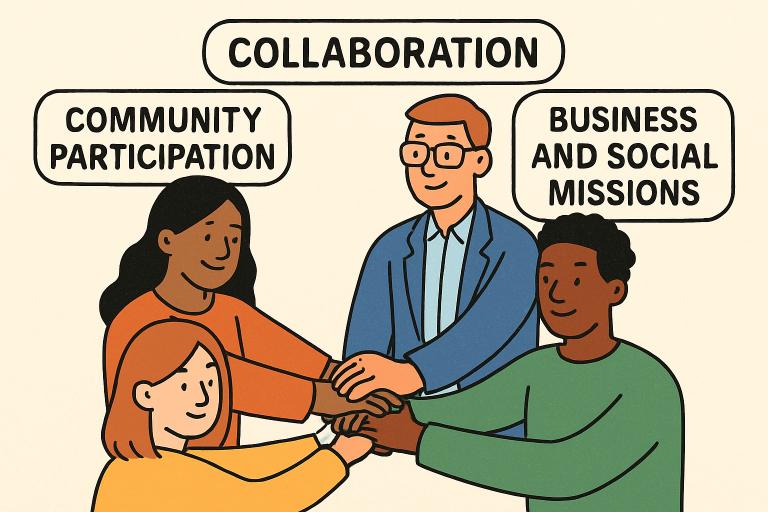
Successful social innovation rarely happens without commitments. Societal enterprises realize that partnerships are long-term and essential to maximizing impact. By building strong alliances with nonprofit and government agencies and private-sector companies, these organizations draw upon a diverse range of perspectives and resources, ensuring that complex social issues are tackled from every angle. This multi-stakeholder approach not only expands the reach of each initiative but also multiplies the positive effects for beneficiaries. Equally critical to long-term impact is the well-being of those who lead these efforts. Social entrepreneurs face high levels of stress, but they strive to balance financial viability with mission-driven work. Modern best practices emphasize mental wellbeing, access to mentorship, and robust peer support networks, helping leaders to remain resilient and avoid fatigue. In fact, resources like Harvard Business Review detail how the effectiveness and sustainability of social impact efforts are closely intertwined with leaders’ personal care, underscoring the need to invest in well-being for both individuals and teams.
Blending Business and Charity
The distinction between nonprofit and for-profit sectors is growing increasingly blurred as many organizations embrace hybrid business models to tackle today’s most pressing problems. Social enterprises leverage business strategies, such as tracking impact with data, diversifying revenue streams, and using market-driven tactics, to supercharge their philanthropic work. This blend creates a model that is both adaptable and capable of responding to change, giving organizations the tools to weather financial challenges while deepening their social impact. A standout example is PlayPumps International, which ingeniously combines recreation and necessity by installing merry-go-round water pumps in rural areas, allowing children’s play to generate clean water for communities. These hybrid approaches help ensure that solutions last beyond the life of individual projects or grant cycles and that organizations can reinvest revenue to further their missions, achieving greater long-term benefit for society.
Empowering Students Through Real-Life Philanthropy
Education systems are also evolving to support the next generation of changemakers through direct engagement with philanthropic practice. Innovative universities, such as Stanford, now offer experiential coursework through programs like Philanthropy for Sustainable Development that immerse students in the principles, controversies, and ethical complexities of the field. Crucially, these courses don’t stop at theory. Students actively participate in end-to-end processes, from researching social issues to vetting organizations and distributing real grant money. This hands-on involvement helps students bridge the gap between classroom learning and real-world social impact, preparing them to become thoughtful, effective leaders in the philanthropic sector and equipping them with the confidence to question norms and drive innovation in their future careers.
Transforming the Future of Work
As the nature of work evolves, social entrepreneurs and philanthropists are helping to ease the transition for workers affected by shifting economies and technological change. Initiatives like the Future of Work Grand Challenge bring innovators together to design creative solutions for reskilling and upskilling workers, ensuring individuals can adapt to new industries and opportunities as traditional roles are disrupted. These efforts often include approaches for connecting job-seekers directly with meaningful, higher-paying employment, as well as inviting them to help shape the training solutions from the outset through co-design sessions and feedback loops. This not only boosts economic stability but also gives workers a renewed sense of agency during periods of upheaval, benefiting families, communities, and entire economies in the process.
Conclusion
Social enterprises are at the forefront of a new paradigm in philanthropy, showing that innovation, inclusivity, and compassion can thrive together. These organizations champion flexible funding methods, elevate community voices, create cross-sector collaborations, and apply business savvy to generate broad societal good. As this movement expands and inspires others, we are moving closer to a future where impact is not only sustainable but deeply inclusive and truly transformative, offering hope and tangible progress for generations to come.